

Does a more painful Thermage FLX treatment work better? Why skin thickness, sensitivity, and tip contact matter
2026/08/14
- news
- |
- news
Hello, I am Dr. Kim Yeon-jin, Chief Physician at UHCELL Clinic Gangnam.
“Does it need to hurt more to work properly?” I hear this often during Thermage consultations. Some patients feel a sharper sensation around the eyes but find the cheeks manageable, then wonder whether the energy was delivered unevenly.
I don’t use pain intensity as a measure of treatment success. Skin thickness, fat distribution, and proximity to bone vary across the same face. Prior lifting procedures and tension can change the experience too. Enduring discomfort isn’t the goal. The first task is to find a range of thermal stimulation the skin can tolerate while keeping the treatment tip in stable contact with the intended area.
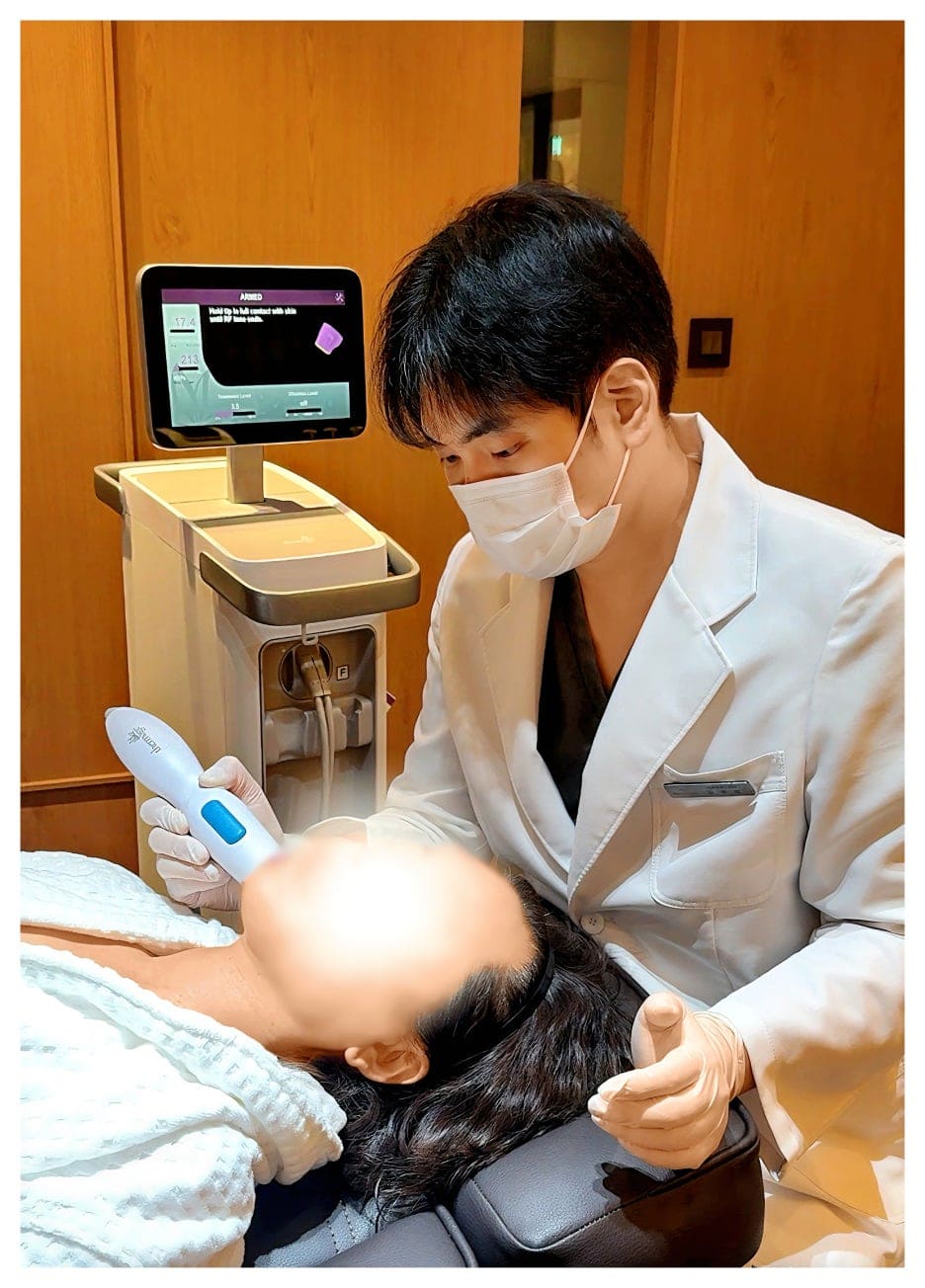
Does stronger pain mean better energy delivery?
Thermage FLX uses monopolar radiofrequency to deliver thermal stimulation to skin tissue. The manufacturer describes the treatment in terms of collagen remodeling that may support smoother, tighter-looking skin; it doesn’t present patient-reported pain as a meter for delivered energy. Sensation is subjective.
I don’t set the expectation that more pain produces a better result. Excessive discomfort can make someone tense the face or move, prompting the clinician to reassess contact with the treatment tip. The reverse is also true: a comfortable experience doesn’t prove that no stimulation was delivered. Device settings, skin response, tip contact, and the patient’s description need to be considered together.
Why do the eyes, temples, and cheekbones feel different from the cheeks and jawline?
The skin and soft tissue around the eyes, temples, and cheekbones may be thinner or closer to bone, so a similar stimulus can feel more distinct. The cheeks and jawline have different tissue thickness and fat distribution. Hollowing and the direction of laxity vary from person to person as well. One sensation threshold cannot describe the whole face.
During consultation, we map sensitive areas rather than treating the face as one zone. I am cautious about uniformly increasing settings where the skin is thin or facial volume is limited. Areas to consider and areas to avoid need to be separated. Current redness or dryness, sensitivity after dental work, and past experiences with radiofrequency or ultrasound lifting are also relevant.
Tip angle and skin contact are part of the plan
The Thermage tip delivers energy while it is in contact with the skin, and the face isn’t flat. Transitions from the temple to the cheekbone, the area beside the mouth, and the underside of the jaw all change angle. The clinician needs to pay close attention to hand position and contact in those areas.
I place more value on stable contact and thoughtful placement than on enduring a stronger setting for longer. During treatment, I ask patients to describe where and how a sensation occurs instead of simply tolerating it. A sudden sharp point and a broad feeling of warmth aren’t the same report. A short exchange provides useful information for adjustment.
What else should a Thermage consultation review?
Skin thickness, fat distribution, visible hollowing, regional sensitivity, and prior lifting procedures all matter. A thinner face with limited volume, or a history of sensitivity to thermal treatment, may call for a more conservative review of the treatment area and settings. Thermage may not be suitable for every person with a similar concern, and another issue may need attention first.
Temporary redness or minor swelling may occur after treatment, and individual reactions and recovery vary. Contact the treating clinic if discomfort differs from what was discussed or persists. Rather than using one pain score to predict an outcome, an in-person assessment should separate areas that may be considered from those that should be avoided and establish a realistic scope.
Frequently Asked Questions (FAQ)
If Thermage doesn’t hurt much, does that mean it won’t work?
No. Sensation varies with skin thickness, location, tension, and prior experience. Pain alone doesn’t show how energy was delivered or predict a result; settings, skin response, and tip contact also need review.
Is it unusual to feel more around the eyes and cheekbones?
Areas with thinner tissue or closer proximity to bone may feel more sensitive. Still, report any sudden sharp or unexpected sensation immediately instead of trying to tolerate it.
Does the setting always need to be lowered when it hurts?
There isn’t one automatic response. The clinician reviews the location and quality of the sensation, skin condition, tip contact, and target area before adjusting settings or placement. Stable treatment comes first.
Should I mention that a previous lifting treatment was painful?
Yes. The device used, areas treated, and how long pain or swelling lasted can inform planning. Share the procedure name and approximate date if you remember them.
Thermage isn’t a test of how much discomfort you can endure. Thin areas around the eyes and temples need to be distinguished from the cheeks and jawline, where tissue conditions differ. Planning should stay within areas where stable tip contact is possible. Judgment comes before intensity.
For a Thermage FLX consultation in Gangnam, UHCELL Clinic Gangnam reviews skin thickness, regional sensitivity, and prior lifting experiences before discussing an individual direction. Areas that may be considered are separated from areas that should be avoided. At UHCELL Clinic Gangnam, we evaluate your unique skin condition to design customized calming, moisturizing, and barrier-support treatments. Results and recovery times vary by individual.
※ Individual results and recovery periods may vary. We recommend consulting a specialist for an accurate medical diagnosis.
This was Dr. Kim Yeon-jin, Chief Physician at UHCELL Clinic Gangnam.
Native English, Japanese, and Chinese-speaking staff are available for your convenience.
Parking: 3 hours of free parking is available in the building. Alternative parking: Yeoksam Pureunsol Library at KRW 300 per 5 minutes (parking fees are not covered).
Lifting Center: 2F-3F WD Building, 13 Teheran-ro 8-gil, Gangnam-gu, Seoul
Anti-aging Center: 2F UH FLAT GANGNAM Hotel, 11 Teheran-ro 10-gil, Gangnam-gu, Seoul
+82-2-6941-0375