

Why summer pores look more visible: Separating sebum, dehydration, acne scars, and laxity
2026/08/11
- news
Hello, I am Dr. Kim Yeon-jin, Chief Physician at UHCELL Clinic Gangnam.
“My makeup looks fine in the morning, but by afternoon it settles around the pores beside my nose.” I hear this often during summer consultations. Pores may look alike in the mirror, but the reason they stand out isn’t always the same.
I don’t assume that oil is the whole problem. I assess shine across the forehead and nose, tightness after washing, depressions on the cheeks, and whether the pore shape follows downward laxity. Separating these patterns helps us choose a realistic priority without adding unnecessary irritation.
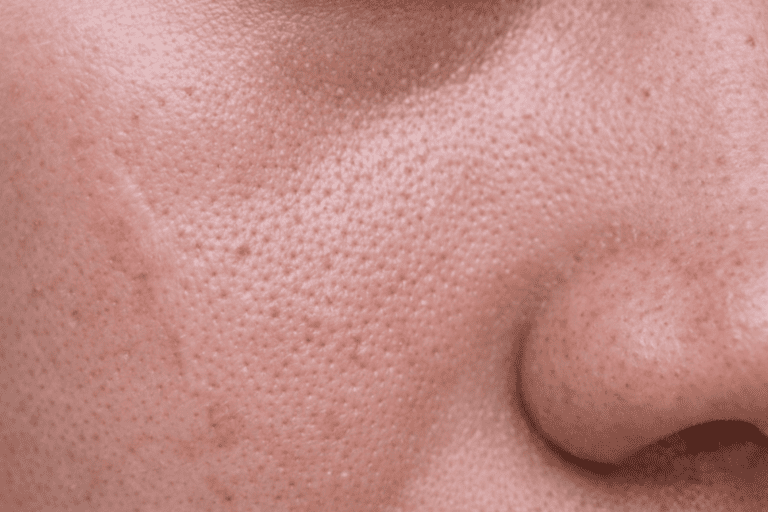
When shine comes first, assess sebum and surface buildup
In hot, humid weather, the T-zone can look oilier because the forehead and nose contain more sebaceous glands. Stronger surface reflection and sebum or dead skin around a pore opening can sharpen its outline, even when the pore hasn’t suddenly changed size.
I’m cautious about repeatedly washing until the skin feels squeaky clean. The fresh feeling is brief, while irritation and tightness can leave the texture rougher and its shadows more visible. I ask when shine peaks during the day, whether blackheads or inflamed spots are present, and how often cleansers and exfoliants are used.
Oily on top but tight after washing can point to dehydration
Some patients have surface shine but feel tightness or warmth across the cheeks after cleansing. When dehydration roughens the surface, foundation can catch along pore edges and nearby lighting can exaggerate the texture. Oiliness and dehydration can coexist.
If your skin feels tight or hot after washing, check whether your cleanser is too harsh or the water temperature is too high. Skipping moisturizer altogether can prolong deeper dehydration and trapped heat. Opting for a lightweight, soothing moisturizer is a much better approach. Avoid adding scrubs, peels, and several new active products at once when the skin already stings or looks red.
A depression on the cheek may be an acne scar, not simply a pore
Round or narrow depressions that cast deeper shadows under side lighting may reflect a mix of visible pores and atrophic acne scars. An atrophic scar is a depression left when the dermal structure doesn’t rebuild evenly after inflammation. Reducing surface oil alone can’t flatten it.
During an examination, I look at how the shadow changes when the skin is gently supported, whether the edges are rolling or sharp, and whether active acne remains. Different depths and shapes shouldn’t be treated as one pattern. Be skeptical of claims that home care can reverse an established depression.
Reduced support can make pores look longer vertically
When pores on the central cheeks or beside the nose look elongated rather than round, and their shape changes as the skin is gently supported, laxity may be contributing. Reduced collagen and support around the opening can make its outline look longer. Dehydration and scars may overlap, so appearance alone can’t provide an exact diagnosis.
More intensity isn’t automatically better. I review skin thickness, current inflammation, prior laser, radiofrequency, or ultrasound procedures, and any filler or skin-booster history before prioritizing sebum, texture, scars, or laxity. An in-person consultation is required for an accurate diagnosis and individualized treatment plan.
Frequently Asked Questions (FAQ)
If my pores look larger only in summer, is oil always the cause?
Oil and light reflection may contribute, but they aren’t the only possibilities. Post-cleansing dehydration, rough surface buildup, acne-scar shadows, and reduced support can all make pores more noticeable.
Will frequent pore strips or scrubs make pores less visible?
They may temporarily remove some surface oil or buildup, but frequent friction can leave tightness and redness. Review your current skin condition and product frequency before continuing.
How can I tell a visible pore from an acne scar?
A clinician considers the depth and edge of the depression, its shadow under directional light, changes when the skin is supported, and whether active acne remains. Photos alone may not be enough for an exact distinction.
Can one treatment address oil, acne scars, and laxity at the same time?
These concerns involve different layers and conditions, so one method can’t be assumed to fit everyone. Skin thickness, inflammation, procedure history, and your priorities need individual assessment.
Visible pores aren’t a single spot to erase. They are an appearance shaped by sebum, surface texture, depressions, and changes in skin support. If cheek indentations or vertical shadows remain after adjusting cleansing and hydration, it helps to assess each factor separately.
At UHCELL Clinic Gangnam, we evaluate your unique skin condition to design customized calming, moisturizing, and barrier-support treatments. Results and recovery times vary by individual. We also review each facial area and your procedure history before discussing the appropriate scope of pore care.
※ Individual results and recovery periods may vary. We recommend consulting a specialist for an accurate medical diagnosis.
※ 효과와 회복 기간에는 개인차가 있으며, 정확한 진단은 전문의 상담을 통해 받으시길 권합니다.
This was Dr. Kim Yeon-jin, Chief Physician at UHCELL Clinic Gangnam.
Native English, Japanese, and Chinese-speaking staff are available for your convenience.
Parking: 3 hours of free parking is available in the building. Alternative parking: Yeoksam Pureunsol Library at KRW 300 per 5 minutes (parking fees are not covered).
Lifting Center: 2F-3F WD Building, 13 Teheran-ro 8-gil, Gangnam-gu, Seoul
Anti-aging Center: 2F UH FLAT GANGNAM Hotel, 11 Teheran-ro 10-gil, Gangnam-gu, Seoul
+82-2-6941-0375